
Prefer to watch the YouTube video? Click Here
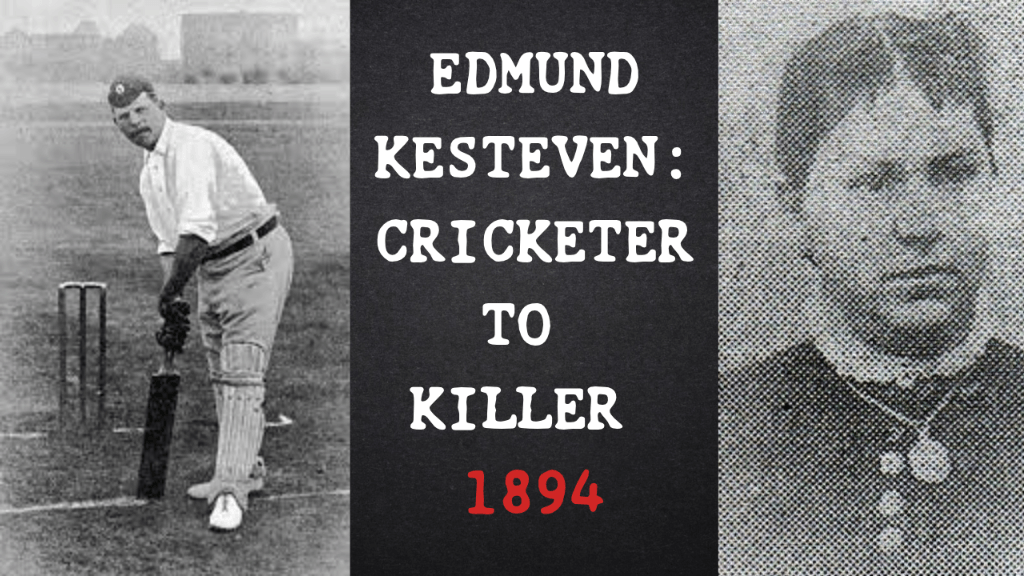
Edmund Kesteven was born in 1855 in Sutton – in- Ashfield, Nottinghamshire. He was the third of 6 children born to Edwin and Dorothy Kesteven. They all worked in the family business as framework knitters. It was a difficult and at times unpleasant trade which used a knitting frame to produce stockings and other delicate pieces of clothing. The Kesteven’s worked from their home; despite this, trading costs were high, and all members of the household worked to earn enough money for the family to live.
The whole family was fans of cricket. Edmund began his career as an assistant professional at Hampstead Cricket Club in 1879. He remained at home with his parents and worked as a frame knitter while playing cricket. In 1881, Edmund moved to Church Cricket Club as a professional player.
The next transfer would be to Holdbeck Cricket Club in Leeds. There he would take a blow to the head with a cricket ball, an injury that may have been far more serious than Edmund or anyone realised at the time.
Edmund went on to have an 11-year cricket career. He was an all-rounder who bowled regularly and batted in the middle order or opening. He was a solid player but never really reached fame or notoriety, but made enough money to live comfortably. His lack of success would not stop Edmund from being quoted as “boastful” of his cricket performances.
However, from 1883 there were indications that Edmund had potential mental health issues. Arthur Bristol, who was married to Ada, Edmunds sister, described him as “seeming very strange” after they attended a cricket match. Once they arrived home, Edmund became paranoid that he was going to be arrested by detectives in Leeds. Just days later, Arthur was called to the local pub because Edmund was brandishing a whetstone, a stone used to shape blades, at the people drinking there. He was described as “dancing with his feet”. Finally, he threatened to kill the next person who walked through the door of the bar. Arthur and another friend were luckily able to calm Edmund down and walk him home. He noted that Edmund was completely sober.
The stories Edmund told about his cricket career became more grandiose, claiming he had toured as far as Australia and was rich from his amazing skills as a cricketer. But just as his fantasies increased, so did his fears; he became deathly afraid of the Leeds detectives coming for him, and he told Arthur he would quote “die like a cat”. Edmund became fascinated by murder stories in the press and would forget to eat solid food for days at a time.
Another incident of note happened in 1885; around midnight one Sunday Edmund was found distressed and running through the street shouting “Murder!” And “Police,” by a police officer. A brief investigation of the local area found nothing amiss, and nothing was reported the next day. The officer decided he was “wrong in the head” and took him home. From there Edmund was under the care of a local surgeon being quote of “unsound mind”. Who reported that his condition was not linked to alcohol and that he was considering admitting him to a lunatic asylum.
Unfortunately, he didn’t; maybe if he had, we wouldn’t be discussing this case today. Edmund recovered after a few weeks, and he explained his illness as a skin infection that caused him pain and a fever.
By 1891, Edmunds cricket career was at an end, and it was at this time he met Sarah Shaw. Her father was the publican at the Robin Hood Inn. Sarah was already married; in 1877 she wed Frederick Oldham, a tailor and brewery agent. It is unknown what caused the breakdown of their relationship, but the marriage was over by 1880, and in 1883 Frederick emigrated to America with a local woman. They would go on to marry bigamously. Divorce was almost impossible to obtain at this time given the circumstances, and extremely expensive. So Sarah did what many women of the era did and cohabitated with her partner.
Sarah was a lady of means; she was a skilled dressmaker and owned not only the house she shared with Edmund but several others, purchased with a generous inheritance from her parents. She was one of 4 siblings; her sisters Kezia and Harriett lived just doors away from Sarah. Her brother had passed some years previously, having drowned whilst serving in the navy.
In the 1891 census, Edmund is recorded as living with Sarah as her boarder- important to keep up appearances- in Penn Street, Sutton-in-Ashfield. He was listed as a framework knitter.
Once his cricket career ended, Edmund found comfort in the bottle. The couple was said to have a turbulent relationship, which was made much worse because Edmund was an aggressive and unpleasant drunk. Their arguments would turn violent; he hit Sarah and even threatened her with a knife. He smashed a piano in one rage. He became paranoid that Sarah was cheating on him with various other men. There was no evidence that suggested that Sarah was unfaithful.
Kezia and other members of the family urged Sarah to leave him for her safety. But Sarah said they got on well most of the time, blaming the drink for Edmund’s actions. All those who knew the couple said that throughout 1894 their relationship greatly improved and the arguments had stopped.
In 1894, Edmund’s tall tales caught up with him. While at the pub, he was boasting about the vast amount of money he had made as a cricketer, leading to a group of men attempting to rob him. There was a struggle, in which Edmund was stabbed. He was charged with assault, but the case was dropped because of lack of evidence.
December 1894, Edmund was found in the pub much more than usual. One friend, Harry Else, stated he was “acting in a funny manner,” but he hadn’t been drinking. He was telling his cricketing stories and became angry when Harry didn’t believe him.
Christmas Eve was a day of preparation for the couple. Sarah and her sisters shopped at the market; she bought ingredients to prepare a special meal for Edmund, planning to make, quote, “something he would like”.
Edmund had gone to the local surgeon to pick up a prescription for Sarah, who had been ill in the run-up to Christmas, suffering from extreme insomnia. The assistant surgeon noted his strange demeanour; there was something about “the way in which he kept rolling about” that drew his attention.
Kezia and her husband were throwing a Christmas Eve party. Harriett attended for a time, then called on Sarah a few doors down to find her and Edmund enjoying supper, before going home.
Just after midnight, Sarah burst through the door of Kezia’s home. She had a severe neck wound, so deep she was unable to speak. Blood was pouring everywhere. At first she was seated on a chair but quickly collapsed onto the floor, where she passed away.
John Dove, Kezia’s husband, ran to Sarah’s house. Edmund answered the door quote “Good God Ted, what have you been doing?” He asked. Edmund returned with John to Kezia; he was present when Sarah passed.
Guests at the party ran to alert the police and Harriett. Edmund admitted freely what he had done. He said that Sarah “deceived him” and that “she deserved it and I ought to have done it sooner”. Throughout it all, Edmund was calm and sober.
The police searched Sarah’s house; blood and a damaged razor were found in the bedroom. While the bedclothes and floor were covered in blood, there was no sign of a struggle.
The post-mortem stated the cause of death was blood loss and asphyxia.
The trial began on the 5th of March 1895; he pleaded not guilty. His defence was insanity; all his unusual behaviour was presented to the court, emphasising that it happened when he was sober. It was believed that insanity was hereditary, so evidence was given regarding Edmund’s maternal aunt who spent 10 years in an asylum and a paternal uncle who died of epilepsy. There was an incorrect assumption made at this time that epilepsy was a symptom of insanity.
It was a long shot defence, plus Edmund didn’t help himself, stating many times he would rather hang that live in an asylum. The jury took 10 minutes to convict him of murder, and the judge passed the mandatory death sentence. But then, as he was being led back to his cell, he did something that made many believe that he didn’t quite understand the enormity of what had just happened. He spotted Wilfred Flowers sitting in the gallery, he was a prominent Nottinghamshire cricketer, Edmund called out quote “Good benefit to ye Flowers!”
The last 3 weeks of his life were spent in Bagthorpe Gaol; he was visited by family and friends. Throughout, he was calm and collected; he didn’t write any letters, and he didn’t speak about Sarah or the murder.
He met the hangman, James Billingham, on the 26th of March 1895.
The only question that remains is motive. The neighbours didn’t hear any arguments that night; there were no signs of a struggle in the bedroom. They had no financial issues; he didn’t benefit from the crime, and he didn’t even try to get away. What made Edmund decide to kill that night?
In prison, he was assessed by a doctor from the lunatic asylum, and he said that Sarah was suffering from insomnia that night and was getting in and out of bed, keeping him awake. Was that enough of a trigger?
Was it the unfounded jealousy? His paranoia got the best of him?
Or did that blow to the head all those years previously cause damage resulting in mental health issues? Most likely a combination of all these factors. Let me know in the comments what you think.
Edmund was survived by his parents, his mother passing in 1903, his father in 1905. Frederick, his brother, died in 1901. His three sisters lived long lives; Ada died in 1938, Sarah Ann in 1939, and Betsy in 1946. His brother Joseph’s passing was much more mysterious.
In the 1881 census, he was in Scotland, and his profession was listed as schoolmaster out of employment. In 1898, he visited the village of Hathersage, Derbyshire, and died. His burial record has a note that quotes, “A stranger died suddenly”